






There are very few moments in modern cultural history when a music genre transcends not just borders, but entire continents and languages, to fundamentally reshape how the world thinks about pop music. K-pop — the hyper-polished, meticulously choreographed, and emotionally charged genre rooted in South Korea — has done precisely that. What began as a domestic entertainment product in the mid-1990s has evolved into one of the most influential cultural exports the world has ever seen, generating billions of pounds annually and amassing a fanbase that stretches from London to Lagos, São Paulo to Seoul.
To understand how K-pop achieved this, it is necessary to look at the conditions that gave birth to it. South Korea’s entertainment industry underwent a radical transformation following the country’s economic crisis in the late 1990s, which prompted the government to invest heavily in its cultural industries as an alternative economic engine. The so-called “Hallyu” or Korean Wave began washing across Asia, carrying with it television dramas, cinema, and most powerfully, music. K-pop groups began flooding regional charts, and what was once considered a niche regional trend began revealing itself as something far more significant.
The machinery behind K-pop is unlike anything found elsewhere in the music world. Aspiring performers — often as young as thirteen or fourteen — audition to join entertainment companies, where they train for years before ever stepping in front of a camera. These trainees are schooled rigorously in singing, dancing, languages, acting, and even public etiquette. The result is a product of extraordinary precision: groups whose synchronised choreography is flawless, whose vocal harmonies are immaculate, and whose public image is carefully curated down to the finest detail. Critics have questioned whether this system places unreasonable pressure on young people, and it is a debate the K-pop industry continues to grapple with, but the artistic output it produces is undeniably extraordinary.
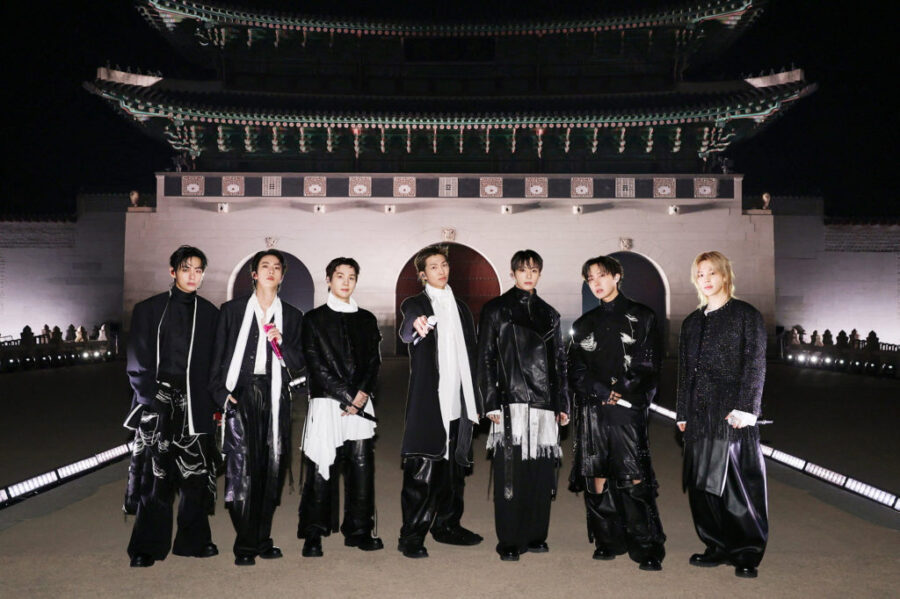
K-pop’s visual identity has been central to its global appeal. Music videos are not merely promotional tools — they are cinematic events, often running to film-like production budgets and featuring elaborate set designs, intricate fashion, and storytelling that rewards multiple viewings. This visual richness gave K-pop an enormous natural advantage in the age of social media and video-sharing platforms. Fans could discover a group through a single video and fall instantly into a world rich enough to sustain months of exploration. The concept-driven nature of K-pop — where each album or era presents an entirely reimagined aesthetic universe — keeps audiences perpetually engaged and hungry for the next instalment.
The role of fandom in K-pop’s global rise cannot be overstated. K-pop fan communities are among the most organised, passionate, and digitally sophisticated in the world. Fans do not merely consume the music; they actively participate in its promotion. They coordinate streaming campaigns to boost chart positions, fund billboard advertisements in major cities, translate content into dozens of languages, and create vast archives of fan-made media that introduce new audiences to their favourite groups. This participatory culture transforms K-pop consumption into a social activity, creating communities that offer genuine belonging and friendship to members who may otherwise feel isolated. The emotional bond between K-pop artists and their supporters is carefully cultivated through content that offers fans an unprecedented level of intimacy — daily vlogs, live-streamed practice sessions, fan meetings, and personalised messages that blur the boundary between celebrity and friend.
The internet is, without question, the engine that drove K-pop from a regional phenomenon to a worldwide one. Before the age of streaming and social media, geographic and linguistic barriers made it near-impossible for non-English-language music to find a meaningful global audience. K-pop dismantled those barriers almost entirely. Dedicated fans produced subtitles and translations, making content accessible across languages. Recommendation algorithms rewarded the intense engagement of K-pop fans by pushing their content to new audiences. K-pop fandoms weaponised trending tools and hashtags to ensure their groups dominated online conversations. The genre became native to the internet in a way that predated and arguably predicted many of the digital engagement strategies now considered standard across the entertainment industry.
K-pop’s relationship with fashion and beauty has also amplified its cultural footprint considerably. The genre has long embraced a gender-fluid approach to presentation that challenges conventional Western norms, with male artists wearing elaborate make-up and feminine silhouettes while female artists project power and athleticism. This aesthetic boldness resonated deeply with younger global audiences who were already questioning rigid gender expectations. K-pop became not merely a music genre but a visual philosophy — a way of presenting oneself to the world — and its influence seeped into mainstream fashion weeks, beauty trends, and high-street retail with remarkable speed.
The global reach of K-pop received its most emphatic confirmation when it began consistently conquering Western music charts — historically the final frontier for non-English-language pop. Groups began selling out arenas across Europe and North America, performing to tens of thousands of fans who sang every lyric phonetically, passionately, and with full hearts even without always understanding every word. The phenomenon forced music industry commentators to confront a long-held assumption: that language was the definitive barrier to mainstream success. K-pop proved that melody, emotion, performance, and spectacle could communicate across any linguistic divide. The music’s appeal was revealed to be fundamentally human rather than culturally specific.
K-pop’s economic impact on South Korea has been staggering. The genre functions as an extraordinarily effective ambassador for Korean culture more broadly, driving tourism, boosting the popularity of Korean cuisine and language learning, and elevating South Korea’s global soft power to a level few could have predicted two decades ago. Universities around the world now offer Korean language courses that routinely fill beyond capacity, with many students crediting K-pop as their motivation for learning. Governments and cultural organisations worldwide have taken note of K-pop’s success as a model for cultural diplomacy — a demonstration that a nation’s stories, sounds, and aesthetics, when packaged with enough quality and intention, can reshape global perceptions entirely.
Yet K-pop is not without its tensions. The intense training system, the rigorous management of artists’ personal lives, and the enormous pressures of constant public scrutiny have all attracted serious criticism. There have been heartbreaking instances of artists speaking openly about the mental health struggles that accompany life inside the K-pop machine. The industry has faced calls to reform its practices, and to some extent it is evolving — a newer generation of K-pop artists exercises greater creative control and speaks more candidly about their experiences. Whether the industry can reconcile its extraordinary commercial success with greater compassion for the individuals at its centre remains one of the defining questions of its future.
What is indisputable is that K-pop has permanently altered the landscape of global pop music. It has demonstrated that creativity and commerce, when aligned with extraordinary precision, can shatter previously unimageable ceilings. It has shown the world that pop music need not be in English to be universal, that fandom can be a force of genuine community rather than mere consumption, and that a relatively small nation can, through the power of culture alone, command the attention of the entire world.
K-pop is no longer simply a genre. It is a template, a movement, and a mirror held up to a globalised world that is hungry for connection, beauty, and spectacle. Whether you are a devoted fan who has followed a group from their debut, or simply someone who once found themselves inexplicably watching a music video at two in the morning and clicking on another, and then another, you have already felt its pull. The K-pop wave is not receding. If anything, the tide is still coming in.