



Electrical faults are seldom encountered at a convenient time. An entire home may abruptly lose power during a storm, a fuse box may trip in the middle of the night, or a socket may begin to spark while dinner is heating up. It is frequently the only viable course of action in circumstances such as these to engage the services of an expert in emergency electrical repairs. Unlike routine maintenance, emergency electrical repairs are performed promptly, typically due to a defect that poses a threat to either property or individuals. Homeowners and business owners can identify when a situation necessitates immediate professional attention rather than a wait-and-see approach by comprehending the variety of issues that fall under this category.
Total or Partial Power Loss
A total or partial loss of power is one of the most prevalent reasons for individuals to pursue emergency electrical repairs. This may imply that the entire property is in darkness, or it may indicate that only specific rooms or circuits are malfunctioning while others are functioning properly. A partial loss of power is frequently indicative of a defect on a particular circuit, which may be the result of a damaged cable, a failed connection, or an overloaded socket. However, a complete loss of power may indicate a problem with the incoming supply, a significant fault within the consumer unit, or even an issue further up the network. In harsher months or when vulnerable individuals are residing in the property, power loss is prioritised for emergency electrical repairs due to its potential impact on heating, refrigeration, security systems, and medical equipment.
Faults in the Fuse Box and Consumer Unit
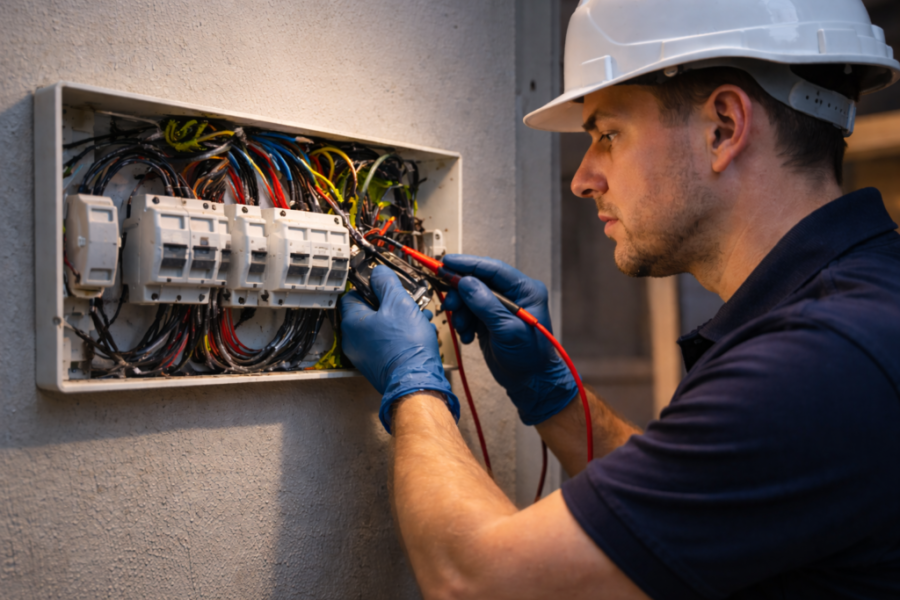
The consumer unit, which is still frequently referred to as the fuse box, is the central point of control and protection for all electrical circuits within a building. The repercussions of an error in this location can be substantial. Signs that a consumer unit requires emergency electrical repairs include a burning odour emanating from the unit, visible scorch marks, buzzing or crackling noises, or breakers that trip repeatedly without apparent cause. An overheating consumer unit poses a significant fire hazard and should never be disregarded. In this region, emergency electrical repairs frequently entail the replacement of damaged breakers, the tightening or replacement of faulty connections, or, in more severe instances, the complete unit being renewed to ensure it meets safety standards.
Sockets and switches that are either sparking or scorched
One of the most obvious indicators that something is amiss with the wiring behind a socket or switch is the presence of a buzzing, sparking, or warm sensation. All warning signs that should never be disregarded include discolouration, a burning plastic odour, or scorch marks around a socket faceplate. These symptoms may suggest a loose connection, a buildup of heat as a result of overloading, or deteriorating wiring insulation. Sparking sockets are a frequent source of emergency electrical repairs due to their potential for electric shock and fire hazards. Typically, an electrician who responds to this type of callout will promptly isolate the affected circuit, inspect the wiring, and replace any damaged components before safely restoring power.
Circuit breakers are frequently tripped.
Modern consumer units are equipped with circuit breakers and residual current devices that are designed to automatically interrupt power when a fault is detected, thereby safeguarding individuals from electric shock and preventing fires. Although an occasional trip caused by a malfunctioning appliance is not uncommon, breakers that trip repeatedly or fail to reset at all indicate a more severe underlying issue. This could be the result of a circuit being affected by moisture, a failing appliance drawing an excessive amount of current, or a flaw in the wiring. This type of persistent tripping frequently results in the loss of power for extended periods in certain areas of a property. Consequently, emergency electrical repairs are often necessary to identify and resolve the underlying issue, rather than merely resetting the breaker.
Wiring that is either damaged or exposed
The wiring can be exposed or damaged for a variety of reasons, such as wear and tear, rodent damage, accidental drilling into a wall, or damage caused during renovation work. Exposed cables pose an immediate and apparent hazard, particularly in areas where they may come into contact with water, metal fixtures, or individuals. Emergency electrical repairs for exposed wiring typically entail the complete repair or replacement of the damaged cable, ensuring the safety of the area, and isolating the affected circuit. This type of issue is particularly prevalent in older properties with ageing wiring systems. Any household that observes damaged cables, whether they are located behind a socket or within a loft space, should handle them as an emergency rather than a matter that can be addressed at a later time.
Water and Storm Damage
Severe weather can result in severe electrical issues, such as lightning strikes that damage a property’s wiring or flooding that causes water to come into contact with sockets, consumer units, or cabling. Any property that has experienced flooding, a leaking roof near electrical fittings, or storm damage to external wiring should have the system examined as a matter of urgency, as water and electricity are a dangerous combination. In the aftermath of a storm or water damage, emergency electrical repairs frequently necessitate the isolation of affected areas of the property, the drying out and inspection of components, and the replacement of any compromised items. Subsequently, it is frequently advised to conduct an exhaustive safety inspection to guarantee that no concealed damage remains.
Near-Miss Incidents and Electric Shocks
Any incident that involves an electric shock, regardless of its perceived severity, should be addressed with the uttermost gravity. A receptacle, switch, or appliance that sends a shock is indicative of a systemic malfunction that has circumvented the standard safety precautions. This is a prime example of a situation in which emergency electrical repairs are necessary to prevent a more severe incident and to ensure the safety of all property occupants. An electrician who receives this type of callout will promptly isolate the pertinent circuit and conduct a comprehensive investigation prior to the restoration of power to that portion of the property.
Fixed Installations and Faulty Appliances
Although portable appliances are not always the direct responsibility of an electrician, faults associated with fixed installations, such as immersion heaters, extractor fans, storage heaters, or integrated kitchen appliances, frequently necessitate immediate attention. A fixed appliance that repeatedly trips the electrics, overheats, or exhibits signs of scorching may suggest a wiring fault rather than a faulty appliance. In these circumstances, emergency electrical repairs may entail the isolation of the appliance, the examination of the associated wiring and connections, and the implementation of repairs to re-establish both functionality and safety.
Faults in the Safety System and Smoke Alarm
A consistent power supply is essential for the proper operation of interlinked smoke detectors and other hardwired safety systems. A fault that results in these systems failing, flashing intermittently, or emitting false alarms on a continuous basis is not merely an inconvenience; it signifies a genuine safety vulnerability in the property. In this context, emergency electrical repairs are designed to promptly restore the functionality of these systems, as a malfunctioning smoke alarm during a fire could have catastrophic repercussions.
The Importance of Prompt Action
The common thread among all of these scenarios is risk. Delaying action can result in a minor issue becoming significantly more severe, whether it is a fire, electric shock, or the practical repercussions of losing power. Emergency electrical repairs are necessary due to the fact that certain issues cannot be postponed until a scheduled appointment. Identifying the warning signs early, such as unusual odours, unexplained tripping, visible damage, or any form of shock, and promptly seeking emergency electrical repairs can be the difference between a simple solution and a much larger, more expensive, and potentially dangerous issue. Property owners can respond promptly and effectively to electrical emergencies by being cognisant of these prevalent fault types.