




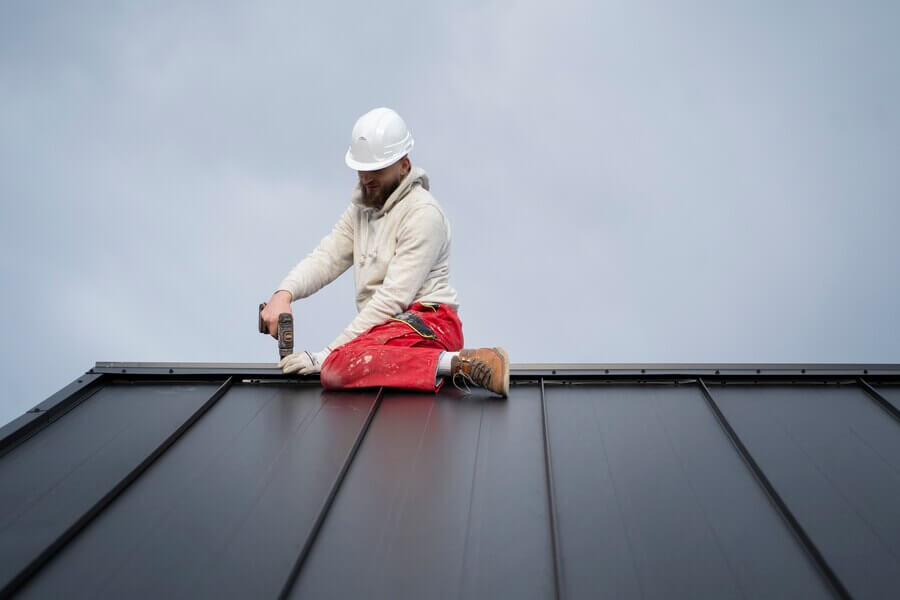
Commercial and industrial roof refurbishment has become an increasingly important priority for building owners and asset managers who want to protect their properties, control costs, and maintain safe, compliant working environments. As buildings age, their roofing systems face constant exposure to weather, temperature changes, and operational demands. Addressing these issues proactively through commercial and industrial roof refurbishment offers a practical way to extend the life of a building envelope while improving performance, appearance, and long-term value.
A key reason refurbishment is so valuable is its ability to transform a tired or deteriorating roof without the disruption and expense of a full replacement. Rather than stripping out the entire structure, many projects use overcladding or retrofit systems that install new materials over the existing roof. This approach instantly upgrades weather protection and thermal performance while allowing the business to continue operating throughout the works. For busy warehouses, factories and multi-site portfolios, the ability to keep sites live during commercial and industrial roof refurbishment can make the difference between a feasible project and an unacceptable interruption.
From a structural standpoint, ageing roofs can develop corrosion, leaks, and weak points that compromise both the building and the operations inside it. Refurbishment tackles these issues by repairing damaged areas, strengthening key junctions, and installing modern, watertight coverings that resist wind, rain, and temperature extremes. This not only prevents further deterioration but also reduces the risk of emergency repairs during heavy weather. Over time, a well-executed commercial and industrial roof refurbishment programme helps stabilise maintenance budgets by replacing frequent patching with planned, long-term solutions.
Energy efficiency is another major benefit. Many older industrial and commercial roofs were built to outdated standards, with limited insulation and poor control of heat transfer. Modern refurbishment systems allow owners to add high-performance insulation, improve airtightness, and specify reflective or thermally efficient coverings that reduce heat loss in winter and heat gain in summer. This improves internal temperature stability, cuts the workload on HVAC systems, and supports lower energy bills across large floor plates. For logistics hubs, production plants and commercial estates, the cumulative savings from a thermally upgraded roof can be substantial over the life of the building.
Comfort and productivity within the building are closely linked to roof performance. In many industrial spaces, workers operate close to external walls and under expansive roof areas that can be exposed to draughts, temperature swings, and leaks. Refurbishment that improves insulation, seals air paths, and resolves water ingress issues leads directly to more stable indoor conditions. Staff experience fewer hot and cold spots, equipment is better protected from moisture, and the environment becomes more predictable and pleasant. In this way, commercial and industrial roof refurbishment supports not just the fabric of the building, but the wellbeing and efficiency of the people working inside it.
Compliance and safety are central drivers for many projects. Building regulations and guidance on fire performance, thermal efficiency, and structural integrity have evolved significantly in recent years. Older roofs may no longer meet current requirements, particularly on insulation values and resistance to fire spread across the building envelope. Refurbishment offers an opportunity to bring assets in line with modern standards, often by upgrading materials, improving detailing, and integrating tested systems that have documented performance. For portfolio owners responsible for multiple sites, a structured programme of commercial and industrial roof refurbishment helps reduce regulatory risk and demonstrates a proactive approach to building safety.
Visual impact should not be underestimated. Roofs, together with cladding and façades, define the external appearance of commercial and industrial buildings. Over time, faded finishes, patch repairs and visible corrosion can make properties look dated and poorly maintained. Refurbishment replaces this with clean, consistent surfaces, updated colours, and modern profiles that project a professional image. For tenants, visitors and clients, a refreshed roof and envelope signals that the building is well cared for and future-ready. In competitive markets, that visual confidence can help attract and retain occupiers, supporting rental values and reducing voids.
Sustainability is another important aspect of modern refurbishment practice. Overcladding and retrofit solutions typically generate far less waste than full strip-and-replace projects, because the existing structure is retained rather than sent to landfill. Adding insulation improves energy performance and reduces operational carbon, while durable, long-life materials extend the replacement cycle and cut resource use over time. Many commercial and industrial roof refurbishment schemes are now designed with life-cycle thinking in mind, balancing initial cost against decades of reduced maintenance, energy savings and lower environmental impact.
From a financial perspective, refurbishment often delivers a strong return on investment. The upfront cost can be significantly lower than full replacement, thanks to reduced labour, faster programmes, and minimal disposal requirements. At the same time, owners benefit from fewer reactive repairs, improved energy efficiency, enhanced asset value and better tenant appeal. When viewed over a ten to twenty year horizon, a well-designed commercial and industrial roof refurbishment strategy can be one of the most cost-effective ways to protect and enhance a property portfolio.
Flexibility in design is another advantage. Modern systems allow roofs to be tailored to the needs of each building, whether that means accommodating rooflights for natural daylight, integrating support for solar arrays, or creating safe access routes for maintenance. Refurbishment is an opportunity to reconsider how the roof functions as part of the wider building, improving features such as drainage, fall protection, and plant supports. This level of customisation helps owners future-proof their assets, ensuring that the building envelope can support changing operational requirements over time.
Minimising disruption during works is a core priority for any commercial or industrial site. Refurbishment methods that install new roofing over the existing structure are inherently suited to live environments, because they preserve weather protection while teams work externally. With careful planning, noisy or more intrusive tasks can be scheduled around operational needs, and access co‑ordinated to maintain safety and productivity. A staged programme of commercial and industrial roof refurbishment across multi-site portfolios allows owners to upgrade large numbers of assets while keeping business activity on track.
Health and safety standards play a vital role in how refurbishment projects are delivered. Working at height, handling materials, and operating on complex roof structures require strict controls, trained teams, and accredited practices. Modern contractors follow robust procedures to manage risks, from edge protection and safe access to lifting operations and weather monitoring. For building owners, choosing a structured, safety-led approach to commercial and industrial roof refurbishment ensures that improvements to the asset do not come at the expense of worker welfare or site security.
The technical choices involved in refurbishment are wide-ranging, covering insulated panel systems, single‑ply membranes, liquid-applied coatings, and composite solutions. Each option offers different performance characteristics, such as thermal values, fire behaviour, durability and maintenance needs. A careful survey and design phase allows these options to be assessed against the specific requirements of each building, ensuring that the selected system delivers the best balance of performance, cost and longevity. In this sense, commercial and industrial roof refurbishment is as much a design exercise as a construction project, aligning technical solutions with business objectives.
Looking ahead, the role of roof refurbishment is only likely to grow. Ageing building stock, evolving regulations, and increased focus on energy performance are creating sustained demand for upgrades to commercial and industrial roofs across the UK. Rather than viewing the roof as a static element, owners are increasingly recognising it as a dynamic asset that can support energy generation, environmental control, and brand image. Commercial and industrial roof refurbishment provides the mechanism to unlock this potential, turning older envelopes into high-performing, compliant and visually appealing systems that support modern operations.
Ultimately, investing in refurbishment is about control, resilience and long-term confidence. By addressing defects, improving performance and modernising appearance, owners gain greater certainty over how their buildings will perform in the years ahead. They reduce the risk of sudden failures, unplanned costs and regulatory issues, while enhancing the comfort and safety of the people who use their spaces every day. In a competitive and fast-changing market, a thoughtful programme of commercial and industrial roof refurbishment is not simply a maintenance decision, but a strategic choice that strengthens the value, reliability and future readiness of every asset it touches.
Get in Touch:
Refurbs.co.uk by NuColour Ltd
Unit 3, Cecil Court, Pegrams Road, Harlow, CM18 7QR
03301 333 420
refurbs.co.uk