




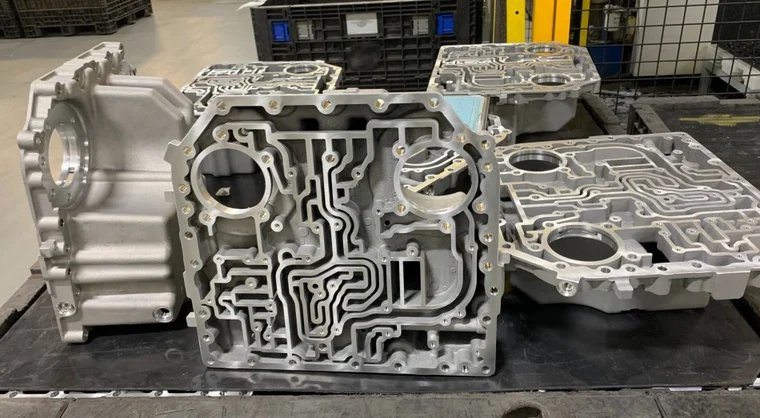
Aluminium is one of the most widely used metals in modern manufacturing, prized for its excellent strength-to-weight ratio, corrosion resistance, and thermal conductivity. When it comes to shaping aluminium into usable components, two processes dominate the industry: sand casting and die casting. Each method offers a unique set of advantages, and understanding the differences between them is essential for engineers, designers, and procurement specialists who want to make the most informed decisions for their projects. Aluminium casting, in both its sand and die forms, has helped transform industries ranging from aerospace and automotive to architecture and consumer goods, and both processes continue to hold significant relevance in contemporary manufacturing.
What Is Sand Casting?
Sand casting is one of the oldest and most versatile manufacturing techniques in existence. The process involves creating a mould from a mixture of sand and a bonding agent, into which molten aluminium is poured and allowed to solidify. Once the metal has cooled, the sand mould is broken away to reveal the finished part. Despite its ancient origins, the sand casting process has evolved considerably, with modern foundries employing sophisticated compaction techniques, high-quality sands, and computer-aided design tools to improve dimensional accuracy and surface finish.
The fundamental appeal of aluminium casting via the sand method lies in its extraordinary flexibility. Because a new mould can be made for virtually every pour, there are very few restrictions on the complexity or size of the component being produced. Large, intricate geometries that would be impossible or prohibitively expensive to achieve through other processes can be realised with relative ease using sand casting. This makes it particularly well suited to prototype development and low-to-medium volume production runs where tooling costs need to be kept to a minimum.
The Advantages of Sand Casting for Aluminium
One of the most significant advantages of sand casting aluminium is the low cost of tooling. Unlike die casting, which requires expensive hardened steel dies, sand casting moulds can be produced quickly and affordably from patterns made of wood, resin, or foam. This dramatically reduces the upfront investment required to begin production, making the process highly accessible for small businesses, start-ups, and manufacturers working on bespoke or low-volume components.
Sand casting also excels when it comes to producing large components. There is essentially no upper limit to the size of part that can be produced through aluminium casting using sand moulds, which is why the process is commonly used for large engine blocks, structural brackets, pump housings, and architectural elements. Die casting, by contrast, is constrained by the physical size of the machine and die, making it unsuitable for very large components.
Another compelling advantage is the ability to work with a wide range of aluminium alloys. Sand casting is generally less sensitive to alloy composition than die casting, allowing manufacturers to use alloys with higher silicon content, or specialist compositions that improve mechanical properties such as tensile strength and ductility. This flexibility in material selection is particularly valuable in applications where specific performance characteristics are required.
The design freedom offered by sand casting aluminium is also notable. Undercuts, internal cavities, and complex three-dimensional geometries can all be accommodated through the use of cores — additional sand shapes placed within the mould before pouring. This level of geometric freedom enables designers to consolidate multiple components into a single casting, reducing assembly time and overall part count.
Finally, sand casting supports relatively straightforward process changes. If a design needs to be modified, the pattern can be altered or replaced at modest cost, and production can resume quickly. This agility is a significant advantage during product development phases where iterative refinement is common.
What Is Die Casting?
Die casting involves forcing molten aluminium under high pressure into a precision-machined steel die. The metal solidifies rapidly within the die, and the finished part is then ejected. The dies themselves are made to extremely tight tolerances and can withstand thousands — sometimes hundreds of thousands — of cycles before requiring replacement. Aluminium casting through the die casting process is particularly associated with high-volume production and tight dimensional control.
There are two primary variants: hot-chamber and cold-chamber die casting. Because of aluminium’s relatively high melting point, cold-chamber die casting is the standard approach, with the molten metal being ladled into the injection chamber before being forced into the die under pressure. This process is well established and widely used across a range of industries.
The Advantages of Die Casting for Aluminium
The most prominent advantage of aluminium casting via die casting is dimensional precision. The high-pressure injection of molten metal into a rigid steel die results in components with extremely tight tolerances and excellent repeatability. Parts produced through die casting typically require minimal post-machining, which reduces secondary processing costs and shortens lead times significantly.
Surface finish is another area where die casting aluminium excels. The smooth surface of the steel die imparts a fine finish to the cast part, which can often be used directly in visible or aesthetic applications without additional treatment. This is a considerable benefit in industries such as consumer electronics, where the appearance of components is as important as their function.
High production rates are a defining characteristic of die casting. Because the cycle time for each part is short — often a matter of seconds — the process is capable of producing very high volumes of components in a short space of time. For manufacturers producing hundreds of thousands or even millions of parts per year, die casting aluminium offers economies of scale that are difficult to match with any other process.
Wall thickness consistency is also markedly better in die casting than in sand casting. The controlled injection pressure ensures even distribution of molten metal throughout the die, resulting in uniform wall sections that contribute to structural integrity and predictable mechanical performance. This consistency is especially important in safety-critical applications such as automotive braking components and aircraft fittings.
Die casting aluminium is also well suited to the production of thin-walled components. The high injection pressure allows metal to flow into fine features and thin sections that would be difficult to fill reliably using gravity-fed processes such as sand casting. This makes die casting the preferred method for lightweight, complex housings and enclosures used in electronics, telecommunications, and medical devices.
Comparing the Two Processes
When choosing between sand casting and die casting for aluminium, the decision ultimately comes down to volume, complexity, size, and budget. Sand casting aluminium is the method of choice when low tooling costs, large part sizes, or design flexibility are the primary requirements. It is the natural home of prototype work, bespoke components, and specialist applications where alloy selection or part geometry would be difficult to achieve any other way.
Die casting aluminium, on the other hand, comes into its own when volume, precision, and surface finish are paramount. The high initial investment in tooling is offset by the low per-unit cost at scale, and the dimensional accuracy achieved through die casting is unrivalled among liquid metal forming processes. For manufacturers committed to consistent, high-quality output at volume, die casting is frequently the optimal solution.
It is also worth noting that the two processes are not mutually exclusive across a company’s product range. Many manufacturers use sand casting to develop and refine designs before transitioning to die casting for full-scale production. This staged approach allows teams to validate geometry and performance before committing to expensive die tooling, and reflects the complementary nature of the two methods.
Conclusion
Both sand casting and die casting represent mature, well-understood approaches to aluminium casting, each with a clearly defined set of strengths. Sand casting offers unmatched flexibility, low tooling costs, and the ability to work with large or complex geometries, making it indispensable for bespoke and developmental work. Die casting delivers precision, speed, and surface quality at high volumes, making it the preferred route for mass-produced components where consistency and efficiency are critical.
Understanding the distinct advantages of each process enables manufacturers to deploy aluminium casting intelligently, selecting the right method for each specific application rather than defaulting to a single approach. As aluminium continues to grow in importance across a widening range of industries, the ability to leverage both sand casting and die casting effectively will remain a key competitive advantage for forward-thinking manufacturers.