




Homeowners often consider a variety of surface options when transforming their gardens in order to discover the sweet spot between long-term durability, aesthetic appeal, and low maintenance requirements. Resin patios have become one of the most adaptable and eye-catching options for contemporary homes in recent years. Recycled plastic and other strong binding agents are mixed to create resin patios, which provide a smooth surface that improves the look of any outdoor space. You may determine if this revolutionary paving option is right for your home by learning about the construction of resin patios, the practical advantages, and the long-term maintenance requirements.
Understanding the technology and installation processes behind resin patios will help you fully appreciate their appeal. An expert polyurethane resin binder is combined with premium natural stone aggregates to form resin patios. A flat, smooth, and durable surface is achieved by trowelling this mixture onto a prepared substrate. Resin patios eliminate the need for mortar joints and sand filling, unlike conventional slab and block paving. Due to the lack of conventional jointing materials, resin patios are able to keep their surfaces free of weeds with little to no work on the part of the owner.
Their permeability is one of the main selling points of resin patios, which is increasing their appeal. Installing resin patios with an open-graded aggregate structure leaves little spaces between the stones, so water can naturally drain through the surface and into the ground below. Because of this quality, resin patios meet all requirements set out by the Sustainable Drainage Systems program, which aims to lessen the amount of water that runs off urban and suburban surfaces in order to keep flooding at bay. Because water drains through resin patios instead of collecting on top, homeowners can save the hassle and expense of installing elaborate supplementary drainage systems, simplifying and streamlining the construction process.
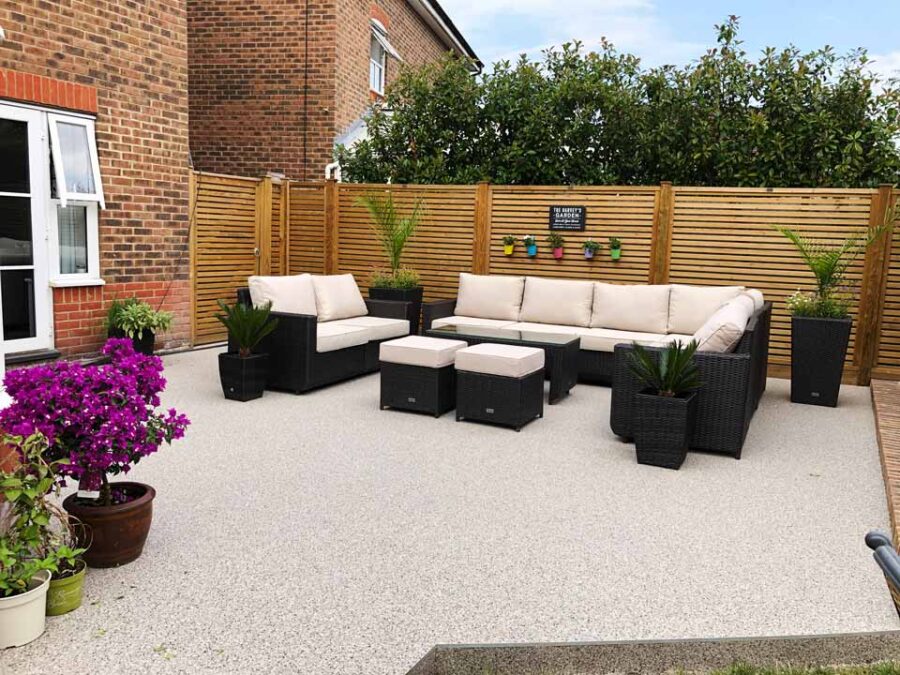
Resin patios are well-known for their extraordinary aesthetic versatility in addition to their practical draining capabilities. From warm tones of Golden Quartz and natural gravel tones to modern greys, silvers, and deep blacks, the real stones utilised in resin patios come in an enormous variety of sizes, hues, and textures. The materials can be mixed on site before application, allowing resin patios to be tailored with elaborate borders, contrasting patterns, or incorporated geometric shapes. This also allows for bespoke designs. The architectural style and colour palette of your home can be customised to match resin patios, whether it’s a classic rural cottage or a clean modern town house.
When looking for a landscape investment that will last, property owners might choose resin patios for their structural strength and longevity. Resin patios can withstand a lot of weight, including patio furniture and lawnmowers, if they are properly installed on a solid surface like asphalt or concrete. Modern resin patios employ a high-grade polyurethane binder that is resistant to UV light, so the surface won’t fracture or yellow from being in the sun for lengthy periods of time. In addition, resin patios are highly resistant to freezing and frost, which can crack or loosen traditional stone slabs in the winter.
Many families choose resin patios to other types of outdoor flooring because they are safe, they are comfortable, and they don’t hurt the feet. Resin patios are great for families with young children, the elderly, or people who have trouble moving around because of the continuous, flat finish they provide. Resin patios also have an inherent slip-resistant surface due to the natural texture of the aggregate, which remains even when wet. Resin patios are perfect for locations next to outdoor pools, water features, garden pathways, and outdoor eating areas because of their anti-slip properties.
With resin patios, you won’t need to spend nearly as much time or money on maintenance as you would with more conventional options like wood decking or block paving. Because moss and weeds have a hard time rooting in the resin-bound matrix, regular maintenance of resin patios usually entails sweeping up fallen leaves and other debris with a firm broom. The surface debris may be easily removed from resin patios by cleaning them periodically with a garden hose or a low-pressure jet wash. This will keep them looking fresh and lively year after year. The non-porous covering on the individual stones of resin patios prevents liquids from seeping deeply into the material, therefore they do not suffer from oil staining or chemical discolouration like standard concrete paving does.
Although resin patios have many advantages, a high-quality finish needs careful application and exact preparation. The quality of the base is crucial to the durability of resin patios. A solid, load-bearing sub-base is required for the installation of resin patios in order to avoid settling, movement, or structural cracking that can occur with time on loose dirt or soft ground. Extreme heat or wetness during curing will weaken the resin binder’s bonding power, so it’s important to keep an eye on the weather as you work. As a result, resin patios typically require careful preparation and expert craftsmanship for an installation to go well and last as long as intended.
An increasing number of eco-conscious homeowners are opting for resin patios as a result of environmental concerns. Resin patios have a permeable construction that helps recharge local groundwater and reduces urban heat absorption. The natural rocks used in them are frequently supplied from sustainable quarries. When laid over preexisting acceptable foundation, resin patios offer a comparatively sustainable alternative to traditional stone slabs and reduce the need for energy-intensive excavation work. Resin patios have a lengthy lifespan, which means they won’t need to be replaced very often, which means less waste during the garden’s lifecycle.
The total cost of resin patios should include not just the upfront investment but also the money saved on maintenance over time. Resin patios may cost more up front than plain gravel or concrete flagging, but they end up being far more cost-effective in the long run because to their increased visual appeal, longevity, and reduced maintenance needs. Due to the fact that resin patios do not require frequent sealing, weed spraying, slab repositioning, or joint re-pointing, homeowners can save a lot of time and money during the life of their patios.
When it comes to their adaptability, resin patios aren’t only for use in formal garden settings. Garden pathways, ornamental stepping areas, tree surrounds, and courtyards can all be built using the same method as resin patios, giving the impression of a continuous aesthetic theme throughout the entire outdoor space. The accuracy with which resin patios may be poured around retaining walls, garden beds, and other landscaping elements enables gardeners a great deal of leeway to be creative when designing their spaces.
Finally, for a modern landscape, resin patios are an elegant, functional, and eye-catching option. Resin patios provide a permeable, low-maintenance, and slip-resistant surface that can withstand the demands of daily family life as well as severe weather conditions. They do this by fusing the natural beauty of stone aggregates with the durability of modern resin binders. Resin patios are a great way to increase the value of your home, make your outdoor space more functional, and improve the look of any backyard thanks to the limitless possibilities for customising they provide with colour blending and pattern work.