





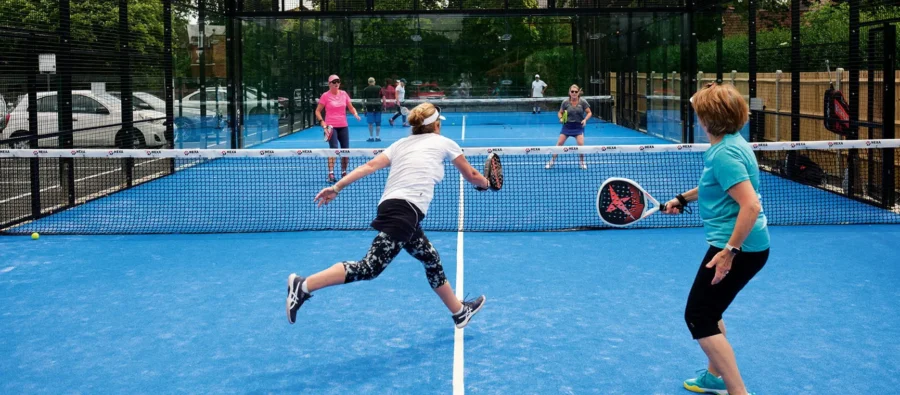
Padel has quietly become Europe’s most social sport. What begins as a casual game with friends quickly becomes a weekly ritual, a league, and, inevitably, a slight obsession. Part of the popularity stems from the game’s ease of use from the first session. When compared to tennis or squash, the learning curve for padel appears to be more manageable.
The data backs this up. The International Padel Federation believes that there are currently more than 25 million players worldwide, with Europe accounting for the majority of that expansion. Padel is Spain’s second most popular sport after football, with over 4 million regular players. The Netherlands, France, and Italy are on a similar path, with courts popping up in urban centers, business parks, and even refurbished industrial locations.
The draw is its ease of accessibility. But what keeps folks coming back is deeper.
A sport that encourages immediate progress
One of the distinguishing characteristics of padel is how rapidly new players can rally. The smaller court, underarm serve, and forgiving racket design allow even total beginners to sustain points throughout their first session. That early sensation of expertise is unusual in racket sports.
For individuals who are new to padel, the most important abilities are positioning rather than power. To enjoy a match, you do not need to have a technically perfect swing. Instead, you’ll learn to anticipate, use the glass, and keep the ball in play.
This establishes a feedback loop that promotes improvement. Every rally feels like progress, even when blunders occur.
My acquaintance in Utrecht, who had never picked up a racket before, joined a corporate padel league last year. Within a month, he was playing twice each week. Within three months, he was evaluating his net positioning and discussing racket balance over post-match cocktails. That level of fast involvement is normal, not remarkable.
Physical Benefits Without the Barrier
Padel is frequently considered as less physically demanding than tennis, but this does not imply a lack of passion. Instead of long sprints and explosive serves, the game promotes short movements, quick reactions, and protracted rallies.
According to Playtomic data, the average padel match lasts 60 to 90 minutes and has a high percentage of continuous play. This translates to a consistent aerobic workout without the stop-start rhythm found in other racket sports.
For novices, this is very vital. The barrier to entry is not only skill, but also fitness. Padel reduces this barrier by allowing players to ease into the physical demands while being completely engaged.
The doubles format adds an additional layer. Sharing the court decreases individual workload while increasing tactical complexity. You’re continuously adjusting to your partner’s positioning, which keeps your mind and body engaged throughout the game.
The Social Engine Behind Sport
What genuinely distinguishes padel is its social structure. Doubles is more than just the default format; it serves as the foundation for the entire experience. Every match requires communication, coordination, and a common sense of momentum.
For individuals who are new to padel, the social aspect is frequently the primary motivator to continue. It’s easy to schedule games, meet new people, and establish a pattern around it.
Clubs have embraced this dynamic. Many now provide mix-in sessions, introductory nights, and informal tournaments to help new players integrate quickly. The end result is a sport that feels less hierarchical than tennis, where court time and skill levels may sometimes be limiting.
Technology has exacerbated this effect. Booking systems, matchmaking applications, and internet communities have made it easier to discover games and partners. The advent of digital documentation, which covers everything from rules to strategies, has made it easier to understand the game’s subtleties.
The developing instructional materials around padel for beginners demonstrates how players are increasingly trying to better, not merely participate. It’s a modest yet significant difference.
Learning Through Play, Not Pressure.
Traditional coaching styles frequently prioritise scripted instruction above competitive play. Padel flips the sequence. Most players begin with matches and gradually improve their skills, frequently adding instruction later.
This method fits the sport’s flow. Because rallies are easier to maintain, players will naturally experiment with various shots and strategies. Mistakes become a part of the learning process, not a hindrance to enjoyment.
Nonetheless, coaching remains an important role. As they improve, players learn to detect patterns—when to use the bandeja, how to defend off the back wall, and where to position themselves during a lob exchange. At that point, tailored assistance can considerably speed up development.
Across Europe, there is a growing desire for formal coaching programs. Casual play frequently leads to a more serious attempt to develop, especially among players who begin competing in local leagues.
A sport designed for modern lifestyles.
Padel’s success reflects bigger shifts in how people view sport. Flexibility, accessibility, and social contact are becoming more important than rigid timetables and individual competition.
Padel courts are easy to install in urban areas because to their compact design. Indoor facilities allow for longer playing hours throughout the year. Booking systems enable participants to schedule matches with minimal friction.
For novices, this implies fewer difficulties. To begin started, you do not need to join a club or spend a lot of money on equipment. A single session is sufficient to appreciate the appeal.
This versatility has made padel popular among young professionals and urban areas. It fits into busy schedules while still providing a valuable physical and social outlet.
Conclusion: The first hit is only the beginning.
Padel’s power resides in its ability to mix simplicity with profundity. It welcomes novice players without overwhelming them, but still provides enough intricacy to keep them involved over time.
For those who are new to padel, the first experience might be quite positive. Rallies come swiftly, matches feel convivial, and improvement appears to be within reach. But what begins as a casual introduction frequently evolves into something more sustained.
The sport does not demand excellence; rather, it celebrates participation. In doing so, it establishes a path from first hit to regular play that few other racket sports can match.
That is why so many players do not simply try padel. They stick to it.
Author’s Bio:
Jasper van Dijk is a sports technology journalist who covers racket sports. He plays frequently and researches participation trends across Europe.