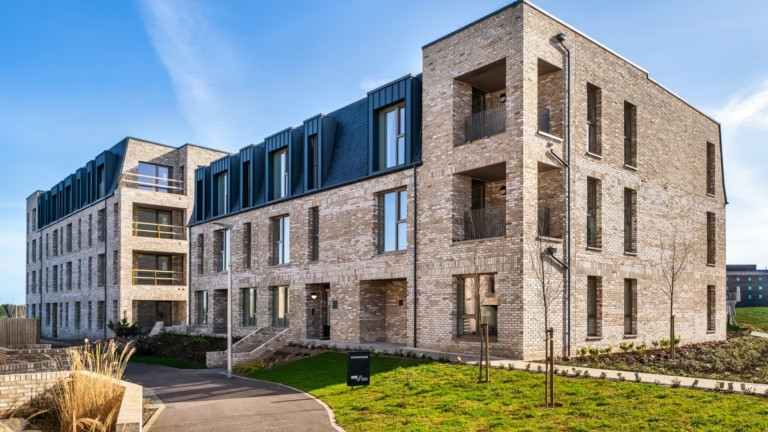





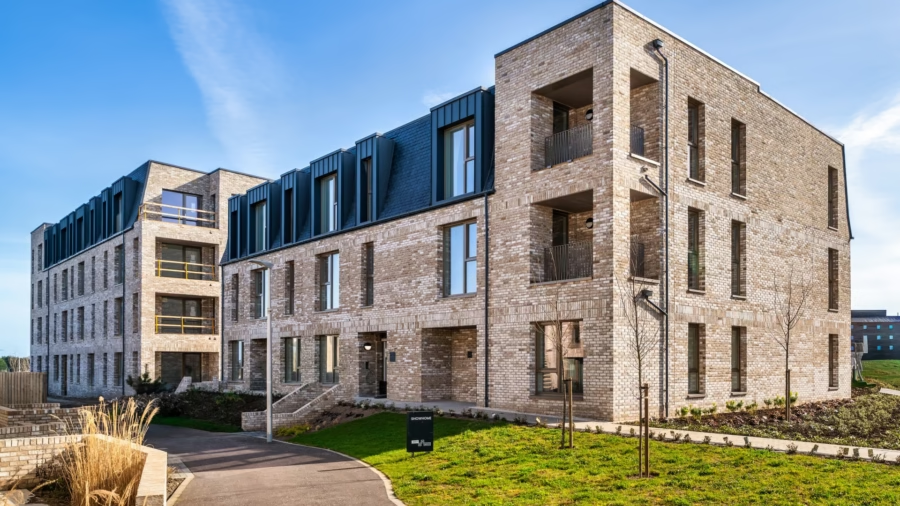
Getting the right insurance for someone who is in charge of a private building with multiple apartments is not as easy as picking one off the shelf. Blocks of flats insurance is a special kind of property insurance that is made to cover the risks that come up when several households share a single structure. This is because everyone in the building is responsible for the building’s structure, the common areas, and everyone’s safety. No matter who sets up the policy—a freeholder, a management company, or a residents’ management company—knowing what’s usually covered helps protect the building, its residents, and the people who run it.
At its core, blocks of flats insurance is based on buildings cover, which covers the building itself. This includes the roof, the outside walls, the foundations, the windows, and all of the property’s permanent fixtures and fittings. Unlike regular home insurance for a single dwelling, this type of coverage has to take into account the fact that damage to one part of the building, like a roof that leaks or a base that cracks, can affect many flats and many people at the same time. Because of this, the cover is usually set up to protect the whole building as a single insurable asset, rather than each flat as a separate unit. Blocks of flats insurance is typically set up as a group rather than leaving each leaseholder to handle it on their own.
Protection against a wide range of risks is an important part of any policy. Fire is still one of the biggest risks for any building with more than one unit, and most insurance policies cover damage from fire, smoke, and explosions. Damage from storms and floods is also covered by default, which shows that extreme weather events are happening more often in the UK. Another important thing to think about is how the water will get out. This is especially important in apartment buildings, where a broken pipe or spilt appliance in one apartment can do a lot of damage to the apartments below. Because this happens so often in buildings with more than one floor, insurers pay close attention to how escape of water claims are handled in blocks of flats insurance. Policyholders can expect this to be a detailed part of any policy paperwork.
In most cases, subsidence, heave, and landslip are also covered. However, because of the cost and difficulty of fixing these problems, there are often higher excesses for these items. Because subsidence claims can take months or even years to settle and may need to be monitored on a regular basis, managing agents and freeholders should carefully look over this part of blocks of flats insurance, making sure they know not only if the risk is covered but also what conditions and exclusions might apply.
Aside from the building itself, communal places are another important thing that blocks of flats insurance covers. It usually comes with shared areas like hallways, stairs, entrance lobbies, and gardens. It also usually comes with shared services like lifts, boilers, and door entry systems. These places often get more use and wear and tear than the inside of individual apartments, and if they get damaged or stop working, it can affect everyone in the building. Coverage for these kinds of shared features is what makes blocks of flats insurance different from regular home insurance. It also shows that residents and freeholders of a multi-unit property share the risk that comes with living in or managing it.
Another important part is liability cover. People who aren’t working on the building can make claims against you if something goes wrong and hurts them or damages their property. This is called public liability insurance. For instance, if a piece of render falls off of an outside wall and hurts someone on the pavement below, the public liability cover in the blocks of flats insurance would usually pay for the claim. In the same way, employers’ liability insurance is usually included or can be added on if the building has direct employees like a housekeeper, cleaner, or maintenance worker who works on-site. So, if an employee gets hurt on the job, there is enough cash protection in place to cover the costs.
Terrorism cover is being thought of more and more as part of a full plan, especially for bigger projects or ones that are in cities. In spite of the low chance that a terrorist attack would happen in any one building, many freeholders choose to add this as an extra to their blocks of flats insurance policy because they know how expensive it can be to rebuild after an attack.
Loss of rent and other housing options are often included in these policies as well. In the event that an insured event, like a serious fire, makes a block uninhabitable, residents may need to be moved briefly while repairs are made. Loss of rent provisions can make up for lost income if a property is rented out and can’t be occupied during the repair period. Coverage for the costs of finding another place to stay can help pay for these costs. This part of blocks of flats insurance is especially important for buildings with a lot of rented apartments, since a long period of empty apartments could put a lot of strain on the building’s finances.
Accidental damage is sometimes built in as standard, but more often than not, it’s an extra that you can choose to add on. This includes damage that wasn’t planned or expected and doesn’t fit neatly into the categories of fire, flood, or storm. For example, damage that happens during maintenance work or when someone hits part of the structure by accident. Because some events might not clearly fall under a named risk, this extension can give people who are in charge of a block of flats a lot of peace of mind.
Another important area to talk about is engineering and plant cover, especially for buildings that have lifts, shared heating systems or other mechanical installations. These systems need to be checked regularly and often break down. Specialised cover for engineering plant can cover the cost of fixing or replacing them, as well as the risk that comes with it if a malfunction hurts someone or damages something. This is an area of blocks of flats insurance that is more specialised and usually applies to bigger or more complicated projects.
It is important to pay close attention to the question of how the building is valued for insurance reasons. Most of the time, insurance for blocks of flats is based on reinstatement, which means that the amount insured should cover the full cost of rebuilding the property from scratch, including demolition, site clearance, professional fees and following current building regulations, not just its market value. There is a real risk of under-insurance in this industry, so freeholders and managing agents should get a professional reinstatement valuation done on a regular basis to make sure the sum insured keeps up with the costs of rebuilding, which can go up because of things like inflation, changes in building methods, or new rules.
Excesses and policy conditions should also be carefully looked over. Different types of claims usually have different excess amounts. For example, claims for water escaping or sinking often have bigger excess amounts than claims for fire or storm damage. Knowing these limits helps the people who are in charge of the building guess how much they might have to pay out of pocket if a claim comes up.
Last but not least, it’s important to note that the freeholder or the organisation in charge of the building, like a residents’ management company, is typically responsible for arranging blocks of flats insurance, not the leaseholders individually. The cost is usually paid by service fees, which means that all residents help protect the building as a whole, even though there is only one policy. Taking a group approach shows that the risks are shared, which is a big reason why blocks of flats insurance is set up so differently from regular home insurance.
To sum up, blocks of flats insurance protects a lot of different things, such as the building itself and the common areas, as well as against responsibility, loss of rent and specific risks related to lifts and engineering equipment. Because it’s complicated and everyone in the block is responsible for paying for it, the people who set up this kind of policy need to carefully read over the terms, exclusions, and valuation basis to make sure that the block and everyone who lives there are properly protected against the risks they are most likely to face.