






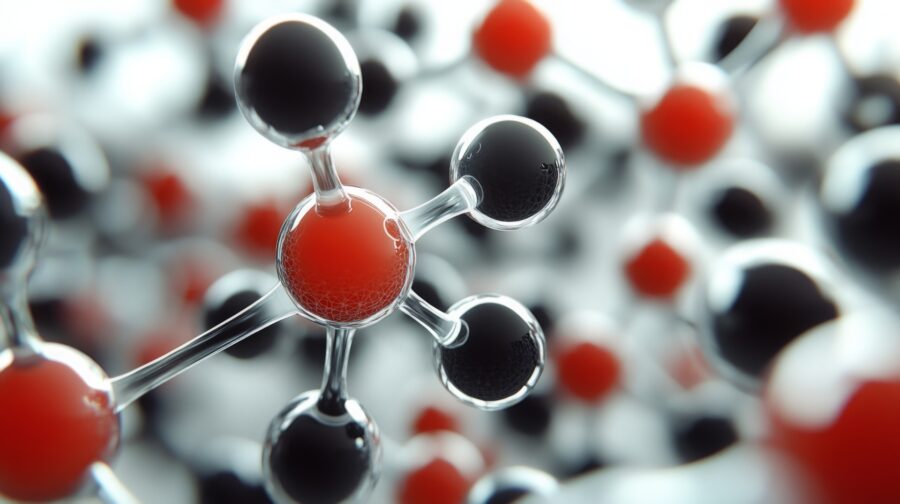
Peptides have become an increasingly important focus in modern scientific research, offering a versatile platform for investigating biological mechanisms, signalling pathways and molecular interactions. Defined simply, peptides are short chains of amino acids linked by peptide bonds, typically shorter than full-length proteins. Despite their relatively modest size, they can exhibit highly specific binding and functional characteristics, making them valuable in diverse laboratory settings. Organisations such as CK Peptides supply these compounds strictly for controlled research environments, where they are handled by trained professionals who understand their properties and limitations.
Understanding Peptide Structure
At the most fundamental level, peptides are built from amino acids, which are organic molecules containing both an amino group and a carboxyl group. When two amino acids join, they form a dipeptide via a condensation reaction that creates a peptide bond. Extending this process generates oligopeptides and polypeptides, with the exact length often defining how a molecule is classified in research contexts. The sequence of amino acids, known as the primary structure, determines the chemical properties and potential conformations that a peptide can adopt.
Peptides can form secondary structures such as alpha helices and beta turns, depending on their sequence and environment. These structural motifs influence how a peptide interacts with other molecules, including receptors, enzymes and nucleic acids. In some research applications, peptides are designed to mimic specific regions of larger proteins, allowing scientists to explore how those regions contribute to binding or catalysis. CK Peptides and similar suppliers focus on providing defined sequences synthesised to precise specifications, enabling reproducible experiments and comparative studies.
Chemical Modifications And Stability
A key strength of peptide-based research tools is the ability to introduce targeted chemical modifications. Researchers can incorporate non-natural amino acids, protective groups or labelling moieties to alter properties such as stability, solubility or detectability. For example, terminal modifications can help reduce degradation by exopeptidases, while side-chain modifications may fine-tune a peptide’s charge or hydrophobicity.
Stability is a central consideration in peptide research. In aqueous environments, peptides can be susceptible to hydrolysis, oxidation or enzymatic cleavage. To address this, scientists may use strategies such as cyclisation, where the peptide backbone is closed into a loop, or the inclusion of D-enantiomer amino acids, which are less readily recognised by many enzymes. These approaches allow peptides to persist long enough in experimental systems to yield meaningful data, whether in cell-free assays, cell cultures or other in vitro models.
Peptides In Receptor And Enzyme Studies
One of the most common uses of peptides in the laboratory is as probes to study receptors and enzymes. Many endogenous signalling molecules, including hormones and neurotransmitters, are peptide-based, and short sequences derived from them can help dissect which regions are critical for binding. By systematically varying amino acids within a peptide, researchers can perform structure–activity relationship studies, identifying residues that enhance or reduce affinity.
Enzyme research also benefits from peptide substrates and inhibitors. Short sequences can be designed to match known cleavage sites, enabling quantitative assays of protease activity. Fluorescent or chromogenic tags can be attached so that cleavage events generate measurable signals. In parallel, inhibitory peptides can be engineered to explore regulatory mechanisms or validate potential binding pockets. When sourced from specialist providers such as CK Peptides, these tools can be synthesised with high purity and precise sequence control, which are essential for reliable kinetic and binding studies.
Peptides As Molecular Probes And Tags
Beyond direct receptor or enzyme interactions, peptides serve as versatile molecular probes in imaging and detection. Short sequences with known affinity for particular proteins, membranes or materials can be used to target dyes, nanoparticles or other reporter groups to specific locations. In cell biology, for example, certain peptides are used as nuclear localisation signals or targeting sequences in experimental constructs, helping to direct fusion proteins or labelled components within in vitro systems.
Peptide tags can also facilitate purification and capture. Affinity tags based on short amino acid sequences allow researchers to isolate fusion proteins or complexes using complementary binding partners attached to solid supports. This concept extends to diagnostic assay development, where peptide antigens immobilised on surfaces can help evaluate binding specificities of antibodies in controlled, non-clinical research contexts.
Peptide Libraries And High-Throughput Screening
Combinatorial peptide libraries represent another powerful research approach. By synthesising large sets of peptides with systematically varied sequences, scientists can screen for binding to targets of interest, identifying motifs that exhibit desirable characteristics. Phage display and related techniques use peptide libraries to explore vast sequence spaces, with selection cycles enriching for peptides that bind preferentially to a chosen molecule.
Synthetic peptide arrays, where many distinct sequences are presented on a single platform, support high-throughput screening of interactions, post-translational modification sites or immune recognition patterns. Data from these experiments inform further refinement, computational modelling and hypothesis generation. The availability of custom synthesis capabilities through suppliers such as CK Peptides helps laboratories move efficiently from discovery of interesting motifs to production of focused sets of research-grade compounds for follow-up studies.
Analytical Techniques For Peptide Characterisation
Accurate characterisation is essential to ensure that peptides used in research match their intended specifications. Analytical techniques such as high-performance liquid chromatography and mass spectrometry allow verification of purity, identity and molecular weight. Researchers also pay attention to counter-ions, residual solvents and salt content, as these factors can influence solubility and behaviour in experimental systems.
Spectroscopic methods, including circular dichroism and nuclear magnetic resonance, may be applied to investigate secondary structure and conformational dynamics in solution. These data are especially valuable when studying structure-sensitive interactions or designing peptides to adopt particular shapes. Combining analytical characterisation with functional assays helps build a comprehensive picture of how a given peptide behaves under different conditions.
Peptides In Materials And Nanotechnology Research
The role of peptides extends beyond classical biochemistry into materials science and nanotechnology. Their ability to self-assemble, bind selectively to surfaces and form ordered structures makes them attractive building blocks for experimental materials. Peptide-based hydrogels, films and scaffolds are studied for their mechanical properties, responsiveness to stimuli and compatibility with biological systems in vitro.
At the nanoscale, peptides can direct the growth or organisation of inorganic materials, acting as templates that influence crystal shape or particle distribution. This bioinspired approach allows researchers to explore new routes to advanced materials with defined architectures. In such contexts, precise control over peptide sequence and composition is again vital, reinforcing the importance of high-quality synthetic sources and rigorous characterisation.
Responsible Use And Laboratory Safety
Because peptides can interact with biological systems in specific ways, responsible use in laboratory settings is essential. Research facilities handling these compounds follow established safety protocols, including appropriate personal protective equipment, storage conditions and disposal procedures. Access is typically restricted to trained personnel who understand the properties of the materials and the experimental context in which they are used.
All discussion of peptides in this context is firmly grounded in their role as research compounds for controlled laboratory investigations. They are not presented or considered as products for human use, medical treatment, supplementation or performance-related purposes. Maintaining this distinction ensures that experimental work remains compliant with regulatory and ethical standards, and that peptides continue to be viewed primarily as tools for understanding fundamental science and exploring future technological possibilities.
Conclusion
Peptides occupy a unique and valuable position in contemporary research, bridging the gap between small molecules and full-length proteins. Their modular structure, tunable properties and capacity for precise design make them indispensable in studies of receptors, enzymes, signalling pathways, materials and nanostructures. When produced and supplied as research compounds under rigorous quality controls, they provide scientists with reliable building blocks for hypothesis-driven experimentation.
As laboratories continue to develop more sophisticated models and analytical techniques, the demand for well-characterised peptide tools is likely to grow. By focusing on scientific understanding, careful design and responsible handling, researchers can use these versatile molecules to probe complex systems and generate insights that support the broader advancement of chemistry, biology and materials science.
Get in Touch:
CK Peptides
Worldwide
07344 084954
ck-peptides.com